




Introduction
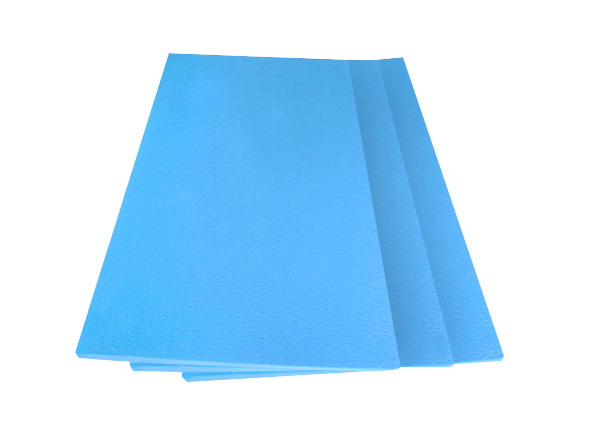
Building insulation materials are designed to reduce indoor heat loss through the building’s external structure, thereby maintaining stable indoor temperatures. Extruded board is manufactured from polystyrene resin, blowing agents, flame retardants, color masterbatches, and other additives through an extrusion process. This produces a board with a fine, uniform surface and a closed-cell honeycomb structure. The surface forms a hard, uniform film, while the internal closed-cell foam remains continuous and uniform. As a result, the extruded board offers several key properties: high compressive strength, light weight, low water absorption, excellent sealing, and non-degradability.

Low Thermal Conductivity – A Key Advantage
Low thermal conductivity is a defining characteristic of high-quality insulation materials. Polystyrene itself is an excellent insulating material. The closed-cell honeycomb structure plays a crucial role in preventing heat conduction by forming a vacuum layer that effectively minimizes heat dissipation through air flow, ensuring long-lasting insulation performance.
-
Thermal conductivity of extruded board: < 0.028 W/mK
(In construction projects, materials with thermal conductivity below 0.25 W/mK are generally considered insulation materials.) -
Key performance indicators:
-
High thermal resistance
-
Low linear expansion
-
Low expansion ratio
-
Closed-cell rate: ≥ 99% – forms a vacuum layer that prevents air-flow heat dissipation
-
Compared to other insulation materials, the extruded board’s closed-cell ratio offers clear advantages in terms of insulation permanence and stability.
Applications
Thanks to its superior performance, extruded board is the preferred choice for building insulation. It is commonly used in:
-
Roof insulation systems
-
Cold storage facilities
-
Refrigerated trucks
-
Interior and exterior wall insulation
In all these applications, the extruded board delivers remarkable results.